
Exploring the Harmonic Series on a Trumpet for Better Playing Techniques
The harmonic series is a fundamental concept that every trumpet player should understand to improve their sound and technique. It shapes how notes are produced and how players can control pitch and tone. This post breaks down the harmonic series on a trumpet and offers practical tips for students to use this knowledge in their practice and performance.
What Is the Harmonic Series on a Trumpet?
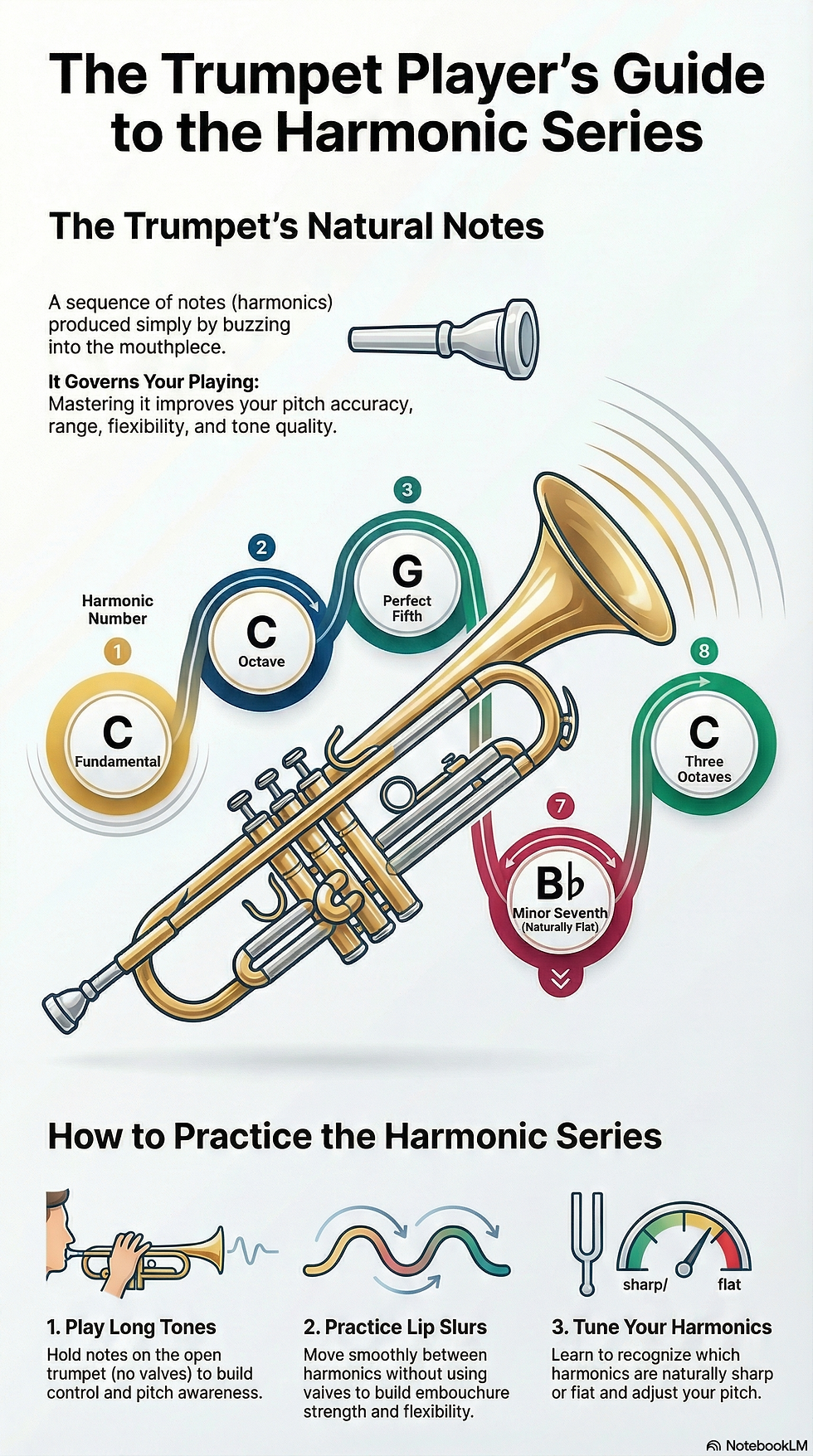
The harmonic series is a sequence of notes that are naturally produced when a trumpet player buzzes their lips into the mouthpiece. These notes are related by simple whole-number ratios and form the basis of the instrument’s pitch system. When you play a note on the trumpet without pressing any valves, you are actually playing one of the harmonics of the fundamental pitch.
For example, the open trumpet (no valves pressed) produces a fundamental pitch, often called the pedal tone, and a series of higher notes called overtones or harmonics. These harmonics include the octave, the fifth above the octave, the second octave, and so on. Each harmonic is a multiple of the fundamental frequency.
Understanding this series helps trumpet players know which notes are naturally easier to play and which require more control.
How the Harmonic Series Affects Trumpet Playing
The harmonic series influences several aspects of trumpet playing:
Pitch Accuracy: Some harmonics are naturally sharp or flat compared to equal temperament tuning. Players must adjust their embouchure or slide to correct these pitches.
Range and Flexibility: The trumpet’s range is built on the harmonic series. Mastery of the series allows players to move smoothly between notes.
Tone Quality: Different harmonics have distinct tonal colors. Players can emphasize certain harmonics to create brighter or darker sounds.
Valve Combinations: Valves change the length of the tubing, effectively shifting the fundamental pitch and its harmonic series. Knowing the series helps players anticipate how valve combinations affect pitch.
Practical Tips for Using the Harmonic Series in Practice
1. Practice Long Tones on Open Harmonics
Start by playing long tones on the open trumpet without pressing valves. Focus on the following harmonics:
Pedal tone (lowest)
2nd harmonic (octave above pedal)
3rd harmonic (fifth above the octave)
4th harmonic (second octave)
5th harmonic (major third above second octave)
Playing these notes slowly and steadily helps build control and awareness of pitch differences between harmonics.
2. Use Lip Slurs to Connect Harmonics
Lip slurs are exercises where you move smoothly between harmonics without using valves. This develops flexibility and strength in your embouchure. For example, slur between the 2nd and 3rd harmonics, then between the 3rd and 4th, and so on.
3. Tune with the Harmonic Series in Mind
Some harmonics tend to be naturally sharp or flat. For instance, the 7th harmonic is noticeably flat compared to equal temperament. Use your ear and adjust your embouchure or slide to bring these notes into tune. This skill is essential for playing in ensembles.
4. Understand Valve Combinations and Their Harmonics
Each valve combination changes the fundamental pitch and its harmonic series. Practice scales and arpeggios with different valve combinations to hear how the harmonic series shifts. This helps you anticipate tuning challenges and adjust accordingly.
5. Experiment with Tone Color by Emphasising Different Harmonics
Try playing the same note but focus on producing a brighter or darker tone by adjusting your air support and embouchure. This subtle control comes from emphasizing different parts of the harmonic series.
Examples of Harmonic Series on the Trumpet
Here is a simplified example of the harmonic series starting from the open trumpet fundamental pitch (C):
Harmonic Number | Note | Interval from Fundamental |
1 | C (pedal) | Fundamental |
2 | C | Octave |
3 | G | Perfect fifth |
4 | C | Two octaves |
5 | E | Major third |
6 | G | Perfect fifth |
7 | Bb (flat) | Minor seventh (flat) |
8 | C | Three octaves |
Notice how the 7th harmonic (Bb) is slightly flat compared to the equal-tempered Bb. This requires adjustment by the player.
Why Students Should Focus on the Harmonic Series
Students often struggle with pitch and tone control on the trumpet. Understanding the harmonic series gives them a roadmap for how notes relate to each other naturally on the instrument. This knowledge:
Builds stronger embouchure muscles through targeted exercises
Improves intonation by recognizing which notes need adjustment
Enhances musicality by allowing control over tone color
Supports technical skills like lip slurs and valve transitions
By integrating harmonic series practice into daily routines, students develop a deeper connection with their instrument.
Final Thoughts on Using the Harmonic Series for Trumpet Playing
The harmonic series is not just a theory concept; it is a practical tool for every trumpet player. It explains why certain notes feel easier or harder to play and why some require more tuning attention. Students who explore the harmonic series gain better control over their instrument’s sound and improve their overall musicianship.
Quiz: Short-Answer Questions
Instructions: Answer the following questions in 2-3 complete sentences, based on the provided source material.
What is the harmonic series on a trumpet, and how are its notes produced?
Define the terms "fundamental pitch" and "overtones" in the context of the trumpet.
How do the trumpet's valves interact with the harmonic series?
In what specific way does the harmonic series influence a trumpet player's pitch accuracy?
What is the relationship between the harmonic series and a trumpet player's range and flexibility?
Explain the practice technique of "lip slurs" and their primary benefit.
According to the text, how can a player use the harmonic series to control their tone quality?
Which specific harmonic is identified as being naturally out of tune, and what is its tuning tendency?
List two of the primary benefits for students who focus on practicing the harmonic series.
Describe the practice tip of using "long tones on open harmonics" and its purpose.
Glossary of Key Terms
Term | Definition |
Embouchure | The way in which a player applies their lips to the mouthpiece of a brass instrument to produce a sound. Players must adjust their embouchure to correct pitch and change tone. |
Equal Temperament | A system of tuning in which the octave is divided into 12 equal semitones. Some natural harmonics on the trumpet are sharp or flat when compared to this tuning system. |
Fundamental Pitch | The lowest pitch produced by the trumpet with no valves pressed. It is the first harmonic in the series. |
Harmonic Series | A sequence of notes naturally produced by buzzing into the mouthpiece, which are related by simple whole-number ratios and form the basis of the trumpet's pitch system. |
Harmonics | The sequence of notes produced above the fundamental pitch. Each harmonic is a multiple of the fundamental frequency. Also referred to as overtones. |
Lip Slurs | Exercises where a player moves smoothly between harmonics without using valves. They are used to develop flexibility and strength in the embouchure. |
Overtones | A synonym for harmonics; the series of higher notes produced above the fundamental pitch. |
Pedal Tone | A common name for the fundamental pitch, the lowest note in the harmonic series on an open trumpet. |
Tone Quality | The character or color of a musical sound. On the trumpet, it can be controlled by emphasizing certain harmonics to create brighter or darker sounds. |
Valve Combinations | The use of one or more of the trumpet's three valves to change the length of the tubing. Each combination shifts the fundamental pitch and its corresponding harmonic series. |


