Mastering Minims on Trumpet and Cornet: Techniques to Play Loud and Soft
Playing minims on the trumpet or cornet with control over volume is a skill that every student musician should develop. Whether you want to deliver a powerful, loud note or a gentle, soft sound, mastering the minim requires attention to breath control, embouchure, and articulation. This post will guide you through practical steps to play minims both forte (loud) and piano (quiet) with confidence and clarity.
Understanding the Minim on Trumpet and Cornet
A minim is a musical note held for two beats in common time. Because it lasts longer than shorter notes like crotchets or quavers, sustaining a minim cleanly requires steady airflow and consistent embouchure pressure. The challenge increases when you want to change the volume while maintaining tone quality.
Playing a minim loudly means producing a strong, clear sound without distortion. Playing it softly demands control to avoid the note sounding weak or airy. Both require different techniques but share the need for good breath support and focus.
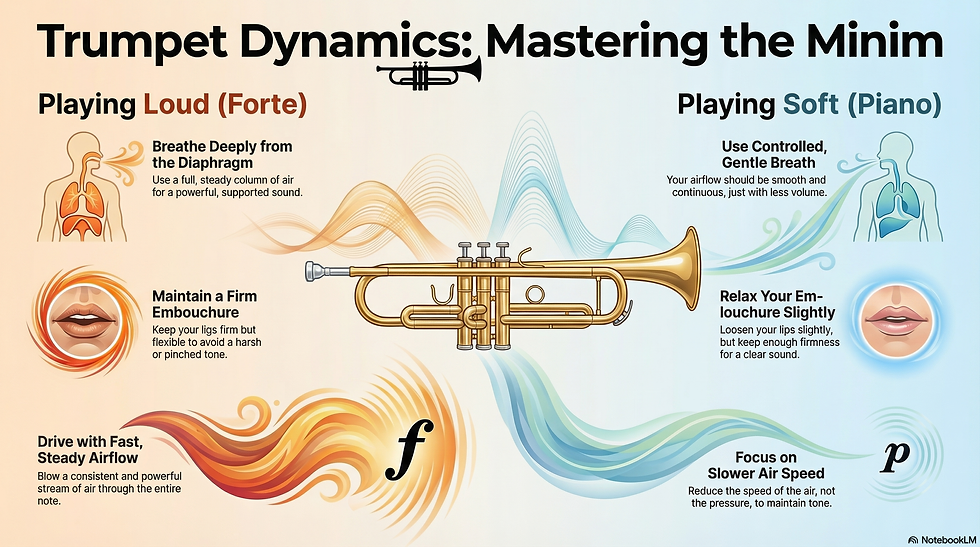
How to Play Minims Loud (Forte)
Playing a minim loudly on trumpet or cornet is about power and control, not just blowing harder. Here are key techniques:
Use deep, steady breath support
Take a full breath from your diaphragm. Avoid shallow breaths from the chest. A strong air column helps maintain a steady tone throughout the minim.
Maintain firm but flexible embouchure
Firm your lips enough to keep the note clear but avoid squeezing too tightly. Over-tightening can cause a harsh or pinched sound.
Focus on steady airflow
Blow a consistent stream of air. Avoid bursts or fluctuations that can break the note or cause unwanted accents.
Use the right tongue position
Keep your tongue low and relaxed to allow smooth airflow. For louder notes, the tongue should not block the air but guide it evenly.
Practice with a tuner or drone
Playing along with a drone note helps you keep pitch steady while increasing volume.
Example Exercise for Loud Minims
Play a minim at a comfortable volume.
Gradually increase volume while keeping the pitch steady.
Hold the loud minim for the full two beats without wavering.
Repeat on different notes to build strength and control.
How to Play Minims Soft (Piano)
Playing a minim softly requires more subtle control. The goal is to keep the tone warm and clear, not breathy or weak.
Use controlled, gentle breath support
Take a smaller breath but keep it steady. The airflow should be smooth and continuous, just quieter.
Relax your embouchure slightly
Loosen your lips a little compared to forte playing, but keep enough firmness to avoid a floppy sound.
Focus on air speed, not pressure
Reduce the speed of the air rather than the pressure. Slow, steady air helps maintain tone at low volume.
Keep the tongue position stable
The tongue should remain low and relaxed to avoid blocking airflow.
Avoid excess mouthpiece pressure
Pressing the mouthpiece too hard against your lips can choke the sound when playing softly.
Example Exercise for Soft Minims
Start by playing a minim at a medium volume.
Gradually decrease volume while keeping the note steady and clear.
Hold the soft minim for the full duration without wavering or breaking.
Practice on various notes to improve control.
Tips to Improve Control Over Minims at Different Volumes
Use a metronome
Keeping time helps you hold the minim for exactly two beats and develop consistent airflow.
Record yourself
Listening back reveals if your loud notes are clear and your soft notes are stable.
Practice long tones
Long tones build endurance and control for all note lengths, including minims.
Experiment with dynamics in simple pieces
Try playing the same minim passages at different volumes to build flexibility.
Stay relaxed
Tension in your face, neck, or shoulders affects tone quality. Keep your body relaxed.
Common Challenges and How to Overcome Them
Wavering pitch on long notes
Focus on steady breath support and embouchure. Use a tuner to check pitch stability.
Breathiness when playing softly
Check your embouchure firmness and airflow speed. Avoid blowing too gently or pressing the mouthpiece too hard.
Harsh or pinched sound when loud
Relax your lips slightly and avoid squeezing. Use a full breath and steady airflow.
Running out of air before the minim ends
Practice breathing exercises and long tones to increase lung capacity and control.
Final Thoughts on Playing Minims Loud and Soft
Mastering the minim on trumpet or cornet at different volumes takes practice and attention to detail. Focus on breath control, embouchure, and steady airflow to produce clear, consistent notes whether you play forte or piano. Use exercises that challenge your dynamic range and record your progress to track improvement.
Try incorporating these techniques into your daily practice. Over time, you will gain the confidence to play minims with expressive power and delicate softness, enhancing your overall musicality.
Practice These Notes with Neal
D as a Minim
E as a Minim
F as a Minim
G as a Minim
A as a Minim
B as a Minim
C as a Minim
Quiz: Short-Answer Questions
Answer the following questions in 2-3 complete sentences, based on the information provided in the source material.
What is a minim, and what is the primary challenge associated with sustaining it on a trumpet or cornet?
Describe the correct breathing technique for playing a minim loudly (forte).
How should a player manage their embouchure when playing a loud minim to avoid a harsh or pinched sound?
Explain the role of airflow when transitioning from playing a minim at a medium volume to playing it softly (piano).
What is a common cause of a weak or airy sound when playing a minim softly, and what is the recommended solution?
Identify two practice tools mentioned in the text and explain how each one helps improve control over minims.
What is the recommended tongue position for playing both loud and soft minims, and why is it important?
Describe the common problem of "wavering pitch" on long notes and the suggested method for overcoming it.
Explain why a musician might run out of air before a minim is finished and what practice technique can help resolve this issue.
Besides specific techniques for volume, what general physical state is recommended for musicians to maintain, and why?
Glossary of Key Terms
Term | Definition |
Breath Support | The use of a full, steady breath from the diaphragm to create a strong and consistent air column for playing. |
Common Time | A time signature in which a minim is held for two beats. |
Drone | A continuous note played on a device (like a tuner) that a musician can play along with to help maintain a steady pitch. |
Dynamics | Variations in volume within a piece of music, such as playing loud (forte) or quiet (piano). |
Embouchure | The way in which a player applies their lips to the mouthpiece of a brass instrument, requiring firmness and flexibility to control the sound. |
Forte | A musical dynamic marking that means to play loudly. |
Long Tones | An exercise where a musician holds a single note for an extended period to build endurance and control over airflow and embouchure. |
Metronome | A device used to keep a steady tempo, helping a musician hold notes for their correct duration. |
Minim | A musical note held for two beats in common time. |
Piano | A musical dynamic marking that means to play quietly or softly. |