
Celebrating Friedrich Kuhlau: The German Composer in Denmark
- Feb 15
- 5 min read
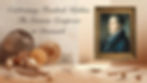
Christoph Friedrich Kuhlau, born on 11 September 1786 and passed away on March 12 1832. He was a German-Danish composer and pianist who left a significant mark on the music of his time.
Best known for his works for the flute, his compositions blend the Classical and early Romantic styles, making him a unique figure in the transition of musical eras.
Early Life and Training
Kuhlau was born near Uelzen, Germany. Tragically, he lost sight in his right eye at the age of seven after an accident. Despite this hardship, he pursued his passion for music. He received formal training in Hamburg under C.F.G Schwencke before escaping the Napoleonic Wars in 1810 and moving to Copenhagen, Denmark, which became his adopted home.
A Career in Denmark
In Copenhagen, Kuhlau quickly established himself as a prominent musician. In 1813, he was appointed as a musician in the Danish court, eventually receiving the title of court composer in 1818. Kuhlau's work during this period spanned a variety of genres, including opera, ballet, and incidental music for plays. His most significant and successful dramatic work was the music for the play Elverhøj (The Elf's Hill), which premiered in 1828. The overture and several pieces from the play remain popular in Denmark.
Kuhlau's Flute Legacy
While K composed works for piano, strings, and opera, he is perhaps most enduringly famous for his substantial body of work for the flute. His flute compositions are numerous and varied, including:
Flute Sonatas
Flute Duets
Flute Trios
Concertos for Flute and Orchestra
These pieces are technically demanding yet melodically pleasing, securing his place as one of the most important composers for the instrument after the Classical period. Flute players worldwide frequently study and perform his sonatinas and duets.
Artistic Connections
In 1825, Kuhlau traveled to Vienna and formed a friendship with Ludwig van Beethoven. This relationship is noteworthy because Kuhlau was one of the few composers to enjoy a genuinely warm personal connection with the famously reclusive Beethoven.
Their mutual appreciation extended to musical discussions, such as the one recorded during a party on September 2nd, 1825. On this occasion, the subject of a musical canon built around the notes B-A-C-H (B flat in German) arose, a sequence Bach himself had improvised around in his celebrated work, The Art of Fugue. Beethoven documented their musical musings on the subject in his letter 442, which is available on Project Gutenberg’s E-book and The Complete Beethoven website. The original composition can be viewed on the IMSLP website; all corresponding links are provided in the reference section.
TO HERR FRIEDRICH KUHLAU.
Baden, September 3, 1825.
I must admit that the champagne went a little to my head yesterday, and I learned once more from experience, that such things rather prostrate than promote my energies; for, though able to respond fluently at the moment, still I can no longer recall what I wrote yesterday.
Sometimes bear in mind your attached
BEETHOVEN.
The letter is reproduced from the E-book of Beethoven's Letters available online, please see the link in the reference section (van Beethoven, 2026).

Key Works Overview
The table below highlights some of Kuhlau's most celebrated and influential compositions.
Category | Work Title | Composition Date | Notes |
Opera | Røverborgen (The Robber's Castle) | 1814 | Kuhlau's first Danish opera |
Incidental Music | Elverhøj (The Elf's Hill) | 1828 | Includes the popular "Lur Call" |
Flute Music | Trio for 3 Flutes, Op. 13 | A standard piece in the flute repertoire | |
Piano Music | Sonatinas, Op. 20, 55, 59 | Various | Widely used for teaching piano |
For examples open the links below
Opera
Incidental Music
Trio for 3 Flutes
Piano Music
Final Years and Influence
Kuhlau lived and worked in Denmark until his death in 1832. His home and extensive collection of musical manuscripts were destroyed in a fire in 1831, a loss that deeply affected him. He is buried in Copenhagen, Denmark alongside other historic greats like Hans Christian Andersen and Søren Kierkegaard, (a theologian and philosopher). Today, his legacy lives on through his melodious and technically brilliant music, particularly his works for the flute, which continue to be essential pieces in instrumental pedagogy and performance.
Review Quiz
Provide a short-answer response of 2-3 sentences for each of the following questions based on the provided biography of Friedrich Kuhlau.
What were the primary reasons for Friedrich Kuhlau’s relocation from Germany to Denmark?
How did a childhood accident affect Kuhlau’s physical health, and did it deter his musical ambitions?
Describe Kuhlau’s professional progression within the Danish royal court.
Which dramatic work is considered Kuhlau’s most successful, and what specific elements of it remain popular?
Why is Kuhlau often associated so strongly with the flute in the history of music?
What was the nature of the relationship between Kuhlau and Ludwig van Beethoven?
What musical theme served as the basis for the discussion and resulting canon between Kuhlau and Beethoven in 1825?
In what way do Kuhlau’s piano compositions continue to influence music education today?
What tragic event occurred in 1831, and how did it impact Kuhlau’s legacy and well-being?
Where is Kuhlau buried, and which other prominent historical figures share his final resting place?
Glossary
Glossary of Key Terms
Term | Definition |
B-A-C-H Motif | A musical motif consisting of the notes B-flat, A, C, and B-natural, famously used by J.S. Bach and discussed by Kuhlau and Beethoven. |
C.F.G. Schwencke | The teacher in Hamburg under whom Kuhlau received his formal musical training. |
Classical Style | A musical era characterized by balance and structural clarity; Kuhlau’s early work reflects this tradition. |
Court Composer | An official title bestowed upon Kuhlau in 1818 by the Danish court, reflecting his high professional standing. |
Elverhøj | Translated as The Elf's Hill, this 1828 play features Kuhlau's most celebrated incidental music. |
Incidental Music | Music composed specifically to accompany a dramatic stage production or play. |
Lur Call | A specific musical piece within the Elverhøj score that remains popular in Denmark. |
Musical Canon | A contrapuntal technique where a melody is imitated by one or more parts; the subject of a musical exchange between Kuhlau and Beethoven. |
Romantic Style | A musical era focusing on expression and emotion; Kuhlau is considered a transitional figure into this period. |
Røverborgen | The Robber's Castle, premiered in 1814, which was Kuhlau's first Danish opera. |
Sonatina | A shorter and usually technically simpler form of a sonata; Kuhlau’s piano sonatinas are staples of music education. |
WoO 191 | The catalog number for "Kühl, nicht lau," the musical canon Beethoven wrote as a tribute to Kuhlau. |
Reference list
Bonn, B.-H. (2026). Friedrich Kuhlau (1786-1832) - Anonymer Kupferstich. [online] Beethoven-Haus Bonn. Available at: https://www.beethoven.de/en/media/view/6193959495794688/Friedrich+Kuhlau+%26%23040%3B1786-1832%26%23041%3B+-+Anonymer+Kupferstich?fromArchive=4886601146564608 [Accessed 15 Feb. 2026].
Bracegirdle, C. (2022). Piano & Theory Lessons. [online] Piano & Theory Lessons. Available at: https://www.pianoandtheory.co.nz/resources-page/2022/4/11/friederich-daniel-rudolph-kuhlau [Accessed 15 Feb. 2026].
Etude Magazine (1914). Some Interesting Facts About Frederick Kuhlau. - ‘The Etude’ Music Magazine, October, 1914. [online] etudemagazine.com. Available at: https://etudemagazine.com/etude/1914/10/some-interesting-facts-about-frederick-kuhlau.html [Accessed 15 Feb. 2026].
IMSLP (1825). Kühl, nicht lau, WoO 191. [online] Imslp.org. Available at: https://imslp.org/wiki/K%C3%BChl,_nicht_lau,_WoO_191_(Beethoven,_Ludwig_van) [Accessed 15 Feb. 2026].
IMSLP (2020). Piano Sonatina in C major, Op.20 No.1 (Kuhlau, Friedrich) - IMSLP. [online] Imslp.org. Available at: https://imslp.org/wiki/Piano_Sonatina_in_C_major%2C_Op.20_No.1_(Kuhlau%2C_Friedrich) [Accessed 15 Feb. 2026].
Petzold, C. (2020). The Complete Beethoven: Day 348. [online] Completebeethoven.com. Available at: https://www.completebeethoven.com/day348.html [Accessed 15 Feb. 2026].
Po Sim Head , F. (2023). How Did This Beethoven Buddy Become ‘the Beethoven of the flute’? [online] Interlude. Available at: https://interlude.hk/friedrich-kuhlau-and-his-works-for-flute-piano-and-operas/ [Accessed 15 Feb. 2026].
van Beethoven, L. (2026). BEETHOVEN’S LETTERS. (1790--1826.) VOL. II. [online] Gutenberg.org. Available at: https://www.gutenberg.org/files/13272/13272-h/13272-h.htm#let442 [Accessed 15 Feb. 2026].
Wikipedia Contributors (2025). Friedrich Kuhlau. [online] Wikipedia. Available at: https://en.wikipedia.org/wiki/Friedrich_Kuhlau# [Accessed 15 Feb. 2026].