
Unlocking Beautiful Sound: Your Essential Piano Hand Position
Ever wonder how pianists create such rich, expressive sounds? It all begins with a proper, relaxed hand position!
The Essential Piano Hand Position
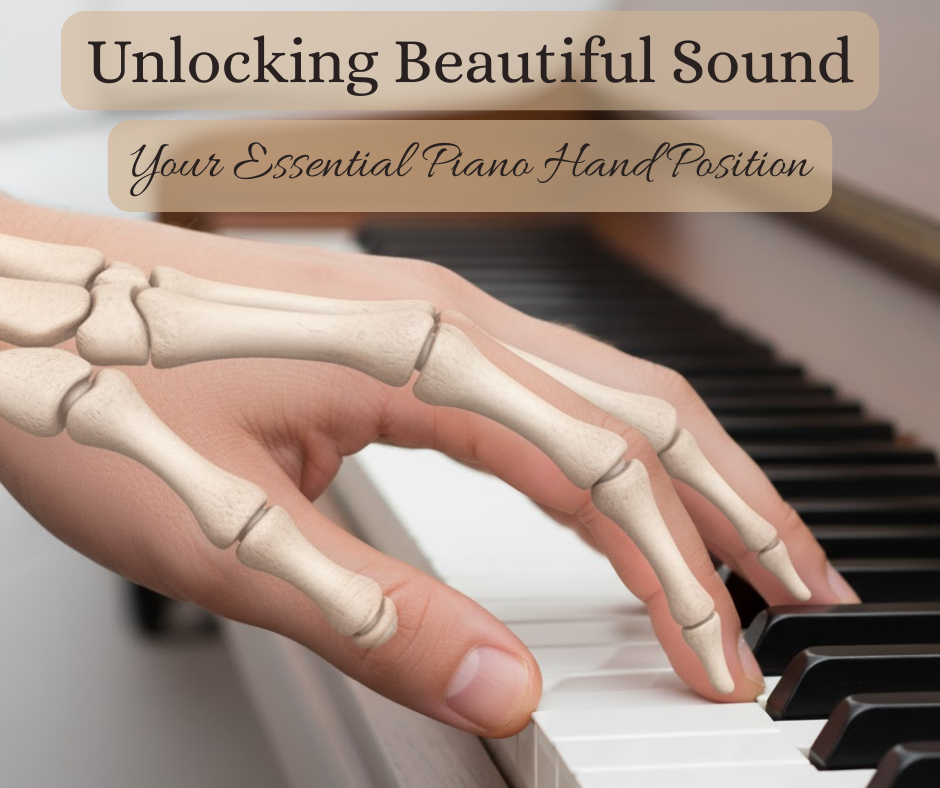
Find Your Natural Curve
Start by letting your hands hang loosely at your sides. Notice that natural, gentle curve? This is the ideal shape you want to bring to the piano! When you place your hands on the keys, imagine you're gently holding a small, soft ball. This rounded posture allows your fingers to move freely and powerfully.
Strong, Curved Fingers
Focus on your finger joints. The PIP joint (the middle knuckle) and the DIP joint (the joint closest to your fingernail) are key! These should remain firmly curved and rounded, never collapsing inward or flattening out. A strong arch in your fingers provides the necessary spring and control for each note.
A Relaxed, Raised Wrist
Your wrist plays a vital role too! It should be gently raised, creating a graceful, relaxed slope from your forearm over your knuckles. Avoid letting your wrist sag or become stiff. This allows for fluid movement and helps prevent tension, ensuring your playing is effortless and musical.
Why This Matters for Sound
This specific hand shape isn't just about comfort; it's fundamental to producing a beautiful tone. A rounded hand and firm, curved fingertips allow you to strike the key directly, transferring the weight from your arm efficiently and producing a full, clear sound. When joints collapse or wrists sag, you lose this crucial connection, resulting in weaker, less controlled notes.
A Quick Note on Fingernails
For optimal control and a clean touch, it's essential that your fingernails do not extend beyond your fingertips. Long nails or extensions prevent proper finger contact with the keys, making it impossible to achieve the precise technique and tone required for piano playing.
Mastering this foundational hand position will not only improve your technique but also unlock a world of expressive possibilities in your music.
Download the Worksheet
Review Quiz
Answer the following questions in 2-3 sentences each, based on the provided text.
What is the recommended first step to find the ideal hand shape for playing the piano?
What object should a pianist imagine holding to achieve the correct rounded hand posture?
Which two specific finger joints are identified as key to a strong hand position?
How should the wrist be positioned relative to the forearm and knuckles?
What is the primary reason that a correct hand position is fundamental to playing the piano?
How does a proper hand position facilitate the transfer of weight to the keys?
What is the consequence of allowing finger joints to collapse or the wrist to sag?
Why should the fingers maintain a strong arch?
What is the guideline regarding fingernails for piano players?
Why do long fingernails or extensions interfere with proper piano technique?
Glossary of Key Terms
Term | Definition |
Natural Curve | The gentle, rounded shape the hand makes when hanging loosely at one's side; this is identified as the ideal shape to bring to the piano keyboard. |
PIP joint | The middle knuckle of the finger. It is crucial that this joint remains firmly curved and rounded, never collapsing inward. |
DIP joint | The joint closest to the fingernail. Along with the PIP joint, it must be kept firmly curved to provide spring and control. |
Relaxed, Raised Wrist | The ideal wrist posture where it is gently raised, forming a graceful slope from the forearm over the knuckles to ensure fluid movement and prevent tension. |
Tone | The quality of the sound produced by the piano. A proper hand position is described as essential for producing a "beautiful tone" that is "full" and "clear." |
Strong Arch | The rounded shape created by firmly curved finger joints (PIP and DIP). This arch provides the necessary spring and control for playing each note. |
Augmented by AI


